
 AR
AR 

 January 1, 2026
Insights from the CEO of Advanced Petrochemical Company
This article was first published at the MBSC Investment Club here
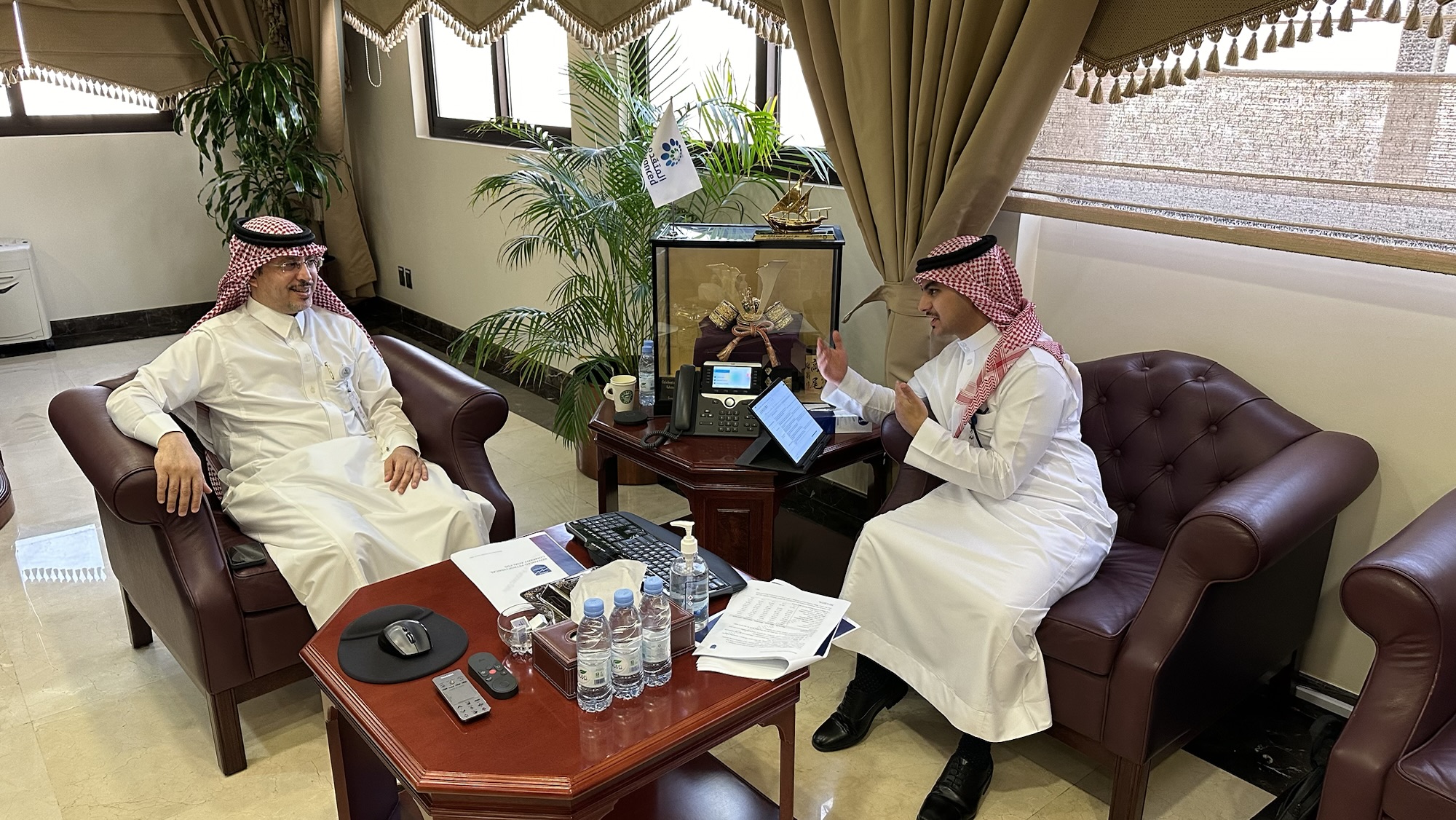
As the clock strikes afternoon on September 11, 2024, I find myself in downtown Jubail Industrial City, getting ready to drive twenty kilometers to the Third Industrial Zone.
Unlike any other place, Jubail Industrial City has a unique identity that can be easily recognized, starting with its streets, buildings, landscaping, and many other things. Adding to its uniqueness, it combines industrial, residential, and commercial zones into one land with an approximate area of 1016 m2, making it the largest industrial hub in the world.
As I approached my destination at the Third Industrial Zone, I encountered a security checkpoint, a common sight in areas like this, where entry is limited to authorized personnel or invited guests.
After passing the checkpoint, the surroundings changed dramatically. The roads were busy with vehicles, tall industrial facilities filled the skyline, and large trucks carrying heavy loads moved steadily, giving off a strong sense of energy; this was the heart of the petrochemical industry, where every minute counted, and productivity was the order of the day.
I drove for 5 minutes towards my final destination: the headquarters of Advanced Petrochemical Company, a publicly listed Saudi company focusing on petrochemicals, chemicals, and renewable energy projects, with a strong emphasis on polypropylene and propylene production.
Advanced Petrochemical Company was on my radar since April of the same year when I started doing one of my master’s degree researches at Prince Mohammed Bin Salman College of Business & Entrepreneurship; the research was an equity financial analysis, a type of research that aims to study a public listed company and analyze its data such as financial statements and earning releases news to draw a conclusion about its market performance.
The following month, I participated in an activity as part of another leadership course in the same master’s degree program. The activity involved using local culture and values to apply concepts discussed in the course through an interview with a business leader.
As you may expect, the CEO of Advanced Petrochemical Company, Mr. Fahad Almatrafi, was the first person to come to mind for the interview because I already knew little about him through that financial research.
I approached Mr. Fahad in the neighborhood center with a typical Manhattan business day in mind, similar to scenes in “Billionaires” and “Succession,” where the CEO navigates public areas while avoiding unfamiliar people.
However, Mr. Fahad was different. He greeted me back with an immediate smile, leading to a relaxed conversation where I introduced myself, shared some insights about my financial research on his company, and proposed interviewing him to get to know his leadership style, and he welcomed the idea
Getting Ready: Meeting the Team
Just as I arrived at the company headquarters at 2:30 p.m., I was welcomed by Mr. Mohammed Abahussian, Mr. Fahad’s assistant, who had arranged everything since my conversation with Mr. Fahad five days ago. Mr. Mohamed is an energetic professional with a charismatic personality who fits the position and gives a good impression of the top management team!
Only a little time passed when Mr. Fahad showed up and welcomed me to the company. This time, he came along with Mr. Abdulaziz Al Ardhi, the Chief Financial Officer (CFO), as they had just finished a regular business meeting.
Mr. Abdulaziz was mentioned in my first talk with Mr. Fahad five days ago, as the latter expressed his interest in my financial research and thought it would be an excellent opportunity for the CFO to look at it and give me some insights. This is a good initiative and a reasonable proposal from Mr. Fahad that I had to accept and start preparing for along with my other preparations for the interview.
The preparations were doubled as I had to extract some contents from that long research written in APA style—a known writing format for academic and educational purposes—and make short, purpose-driven slides for an executive team.
In the slides, I introduced MBSC and the MBSC Investment Club, a student club that aims to foster education in the real market by adopting in-course activities like this financial research. I then presented some conclusions from that research, such as business models, vital finance metrics, and the company’s future expansion.
Many people would consider this a social responsibility activity—the kind of company engagement that benefits the community and individuals; it was, in fact. However, I saw it more as an ongoing conversation during which I delved into various aspects of listening to the perspectives of the CFO and CEO regarding their company and their own experiences.
We spent approximately 20 minutes, the three of us, for the presentation and the subsequent discussion, until Mr. Abdulaziz left us to start my interview with Mr. Fahad.
Below is the presentation where I introduced MBSC, the MBSC Investment Club, and the financial research
Ice-Breaking
To kick off my interview and set the stage for a smooth discussion, I questioned communication, a common attribute in any CEO’s leadership where he has to communicate with an audience. But unlike the general audience—including me—I’m much more concerned about the team under his leadership, as they matter the most in any day-to-day organization’s success. So I asked him the following:
Can you share a time when you had to communicate a difficult message to your team? How did you approach it, and what did you learn about effective communication in leadership at that time? Mr. Fahad responded as follows : He first thanked me for the arrangement and was glad that this was focused on writing about Advanced and doing an analysis about Advanced. He then got back to the subject as follows:
“Normally, any organization passes through good and difficult times, and one should not be in a hurry to make a decision at a good time. Or one should not make commitments at a good time . You need to structure a balance and think wisely about how to manage both.
There were two challenging occasions and were both related to the market dynamics during the financial crises that we passed through at the end of 2008 and the beginning of 2009. In fact, the plant started in Advanced in March , 2008. The Polypropylene prices were in the range of 1600$ to 1800$ per metric ton. The plant was up and running smoothly without any problems. Getting hit by the financial crisis during the first year of operation, was not an easy go when the Polypropylene prices crashed to about $600 to $700 per metric ton.
At that time, Mr.Fahad was GM operation. He mentioned that he needed to work closely with the CEO to help and support in overcoming such a difficult situation. And you need really as a leader, whether you are a CEO or a GM or a manager or a section head, or even an engineer, you need really to get it down and communicate with your subordinate, with your peers in a very positive manner.
You really need to get people engaged around you to be at the same level as you are managing the risk. This is a business risk, so usually, in any organization, you will find what they call enterprise risk management (ERM), and market price fluctuation is normally considered as a top risk in the ERM.
However, the financial crisis was not addressed in a way everybody knew would happen. There might have been some expectations, but not everybody knew when it would happen and when it would take place. What matters is to communicate and ensure that everybody in the organization is very well-informed and knows what to do.
Another key message was “Do not force the employee to do something that they cannot influence. Let them be very much engaged within their circle of influence so that they can be focused so you can build up on the risk mitigations as a team and they have to ensure that the plant is running with maximum possible asset utilization in a safe and sustainable manner.
They need to explore where to shift a product to avail the maximum possible netback. As I had mentioned in my presentation, and agreed by Mr. Fahad, cost optimization is another key aspect which needs to be really focused on all the time because it’s a situation that needs everyone to work around. We need to communicate, and keep in touch regularly with your stakeholders within the boundary of the company.
Another challenge was in the second half to 2022, when we have passed through a sort of a recession in the market, including decrease in product prices and increase in interest rates. Before that, the Inflation rate was high, so the interest rate was adjusted to control inflation, a disruption in the supply chain on various occasions, demand on the market, geopolitical tension between Ukraine and Russia, and then the Red Sea issue.
So we have passed through more than one factor that really impacted the prices. If you see the 2021 results for all petrochemicals, it was everybody’s best year ever. The second half of 2022, was a decline, and companies started to make losses..
So again, we need to communicate this to people. We need to make sure that everybody knows what’s going on. We need to talk to the leaders within your organization, everybody, to have a clear action plan on how to overcome such a difficult situation. Everyone in his area has a specialty, such as shared services, finance, operation, marketing, or technical operation”.
Team-Engagement is Essential
Challenging times are a crucial indicator that distinguishes effective leaders from regular managers; this was clearly seen in Mr. Fahad’s leadership style during difficult times the entire petrochemical industry went through when he mentioned: “You really need to get people engaged around you to be at the same level as you are managing risk.” This approach enhances clarity and team engagement within the workplace. Mr. Fahad emphasized the importance of adopting this concept by sharing details of their company’s annual gathering. He continued :
“The main success factor is having proper communication and talking about it. This was already part of the company’s annual gathering to develop its objectives. It passes through three stages : The first stage is usually within the focal points and sponsors. Then, it is expanded to managers and general managers. We start to brainstorm in a gathering planned outside the company. There are five pillars in our business: (i) Responsible Care, which takes care of ESG, EHSS, and safety; (ii) Human Capital, which is based on people, training, development, recruitment, hiring, talent retention etc. ; (iii) Commercial which addresses marketing, sales and procurement; (iv) Plant asset integrity and reliability and finally (v) Profitability & Growth.
These five pillars have a focal point for each from our managers and sponsored by the Corporate Executive Management. The main objective is to get people engaged.
We need to get people to be a part of the actions and strategies being planned. Also, during COVID, the Company had passed through a very difficult time maintaining our assets and facilities up and running with a good onstream factor, and capacity utilization, it was not an easy go. So we had to talk to our people and make sure that the level of awareness of how to manage such a difficult situation was communicated very well..
One thing Mr. Fahad was proud of, and also everybody in Advanced, especially the project team is that during the COVID year, 2020 in particular, was that the Company was able to sign 15 agreements for the new project, and most of the communication was done remotely through MS teams.. It’s a mega project. However, the last agreement was signed in December 2020. So it was, personally, a great achievement by all means. So, passing through a difficult time could happen everywhere. However, what really matters is how you manage this through effective and proper communication with your subordinates and your stakeholders in general.”
Takeaway from this part of interview

Creating an Impact
In the same context of team engagement, just as Mr. Fahad finished his answer, the word “impact” came to my mind. I consider it the reflection of leaders who lead with intentions. So I asked him: once you have a meeting, you have time to speak or to say some message to your team there, so before you say something, what impact do you want your message to reflect on your employees?
He answered: “Most importantly, we want people to be at the same level of understanding of the particular subject that you need to communicate about. The reason why is that once they understand it, they will be able to support the organization in achieving it. Also, for example, we have a steering committee for EHSS, and the steering committee usually involves managers, general managers, and some EHSS staff.
Sometimes, we talk about something very important. One of the key deliverables and a key message that is always emphasized is to get down the same message to your subordinates in such a way that even an operators and technicians in the field should understand this discussion.
The EHSS general manager developed a protocol for ensuring that whatever key messages from this meeting are really percolated down and are part of the communication protocol within the department itself. It is really cascaded to all levels: operators, panel operators, supervisors, technicians Etc.
Sometimes, when a meeting is held in the admin, people may not know what we are talking about in the field. We need to bridge this certain communication gap. This is extremely important. So, by understanding from where we are coming and what we are talking about, people will appreciate, and they will start to support; As an example: Recently, a meeting was held about the business plan for next year and my colleagues VP Operations and CEO of the new project discussed about the targets that we need to look at, what target to be achieved and the way to create a target that is really challenging but achievable. After concluding this discussion and after alignment, we have to make sure that we have proper communication with our subordinates to make sure that this target can be achieved by taking the appropriate actions, by incorporating it into our business plan, as an objective for next year. It’s not a matter of setting a target, but the necessary guidance and resources should also be provided to achieve the targets. So we have concluded where we are heading, what targets we need to achieve, and how to really achieve them.
There are other examples. For instance, 2021, it was a unique year, the best ever achieved financials and profits for Advanced, and even to communicate such positive results to our stakeholders and investors to the public; Also, during this year we also got Gas / feedstock allocation for a new project, and has also been announced to the public because Advanced being a public listed company, any material development, need to be disclosed to the public and also to comply with the CMA requirements.”
Mindset in Action
You gave a good definition of leadership with actions. You are not only trying to make an impact, but you also try to make this impact valid and work through until you achieve the goals of that message that you tried to send in the beginning. This will let me reach a point at which I need to know a lot about the mindset you are adopting in your work. I told Mr. Fahad.
Emotional intelligence helps leaders maintain a growth mindset, where challenges are seen as opportunities for learning and development. Leaders with this mindset are better at fostering innovation and resilience within their teams and encouraging continuous improvement.
To explore this, I asked Mr. Fahad: You know that there are lots of factors and circumstances that could make you adopt one mindset for the situation and switch to another, but overall, during a normal day, everything is fine. What mindset do you think is good to ensure that the impact will take place?
Mr. Fahad responded as follows: “We need to create a mindset among the employees to do the analysis by themselves and not to approach the CEO for direction; The employees have to do the analysis and come out with options and scenarios to enable the top management to take a critical decision and not day-to-day decisions required for running the business as usual.
So, give the individuals or the leaders that you work with a chance and space to do their analysis.. They should also learn the way to make decisions, and the CEO should not be engaged and make things centralized for every decision, and that’s why we need to empower people to make the right decisions.
But they should know, the top management’s role is to tell them how to make decisions, once they understand it and really capture it, things will move very smoothly without any hurdles because people really need to carry out proper and detailed evaluation; and should not take decisions based on first impression, by challenging the justifications and reasons for taking such decisions including assumptions considered etc.
Sometimes we need to challenge, but in a positive manner, in a way to let them think that yes, they need to revisit because of valid reasons, and they will realize that from next time they should have done it in the required manner before approaching the top Management..
The important requirement is that the employees need to be empowered to take appropriate decisions , which is also embedded as part of the delegation of authority wherein different authority and approvals are cascaded right from the Board level up to the Managers.
Takeaway from this part of interview

Leading in a Dynamic Economy
Mr. Fahad was awarded the best CEO of SMEs by the Ministry of Human Resource and Social Development last year. An award recognizes outstanding leadership in promote and develop business and the capabilities of national human capital.
As our conversation progressed, it became clear to me—and to you, I believe—why Fahad was recognized as the Best CEO at the end of last year. His leadership style, which we delved into some of its attributes, truly embodies the qualities of a visionary leader.
I can confidently say that it is not weird that you got the award for Best CEO at the end of last year. Congratulations on that, by the way. I told Mr. Fahad, and he responded thankfully with a humble smile!
Visionary Leadership extends beyond leadership itself. It is also about other on-work skills, navigating challenges, and leading in a dynamic economy. Here i asked Mr. Fahad:
You know that we are in a petrochemical industry that is subject to many variations and challenges. Not every time is a good time, and at the same time, we can enjoy a good time for a little bit, and then we will be faced with challenges. Also, you are required to deal with many stakeholders, many board members, many other people, the media, and so on. This all has to give you the opportunity to adopt something regarding your decision-making skills. For this, I would like to know if you can recall a situation when you had to switch quickly between the hard time and the regular time in terms of your decisions. What did you do? How did you handle it? How can you shift between them easily? Mr. Fahad responded:
“With regards to the best CEO award, he believes big time that one will never do it as an individual unless you have a great team behind you. This is a fact of life, and he was proud to be part of Advanced team—a great team by all means. So it should not have been called as best CEO award, rather as the best company award. Eventually, the support received from each of the team has enabled him to be recognized as the best CEO. So, thanks to the team -after a blessing from Almighty Allah.
Regarding the next question on shifting from a hard to soft situation, this comes with time and exposure. It’s not just easy, easy to say, but difficult to implement.
One needs to realize that if you are in such a situation and then lead such a position, your actions and decisions are very critical, and you need to realize the consequences of those actions and decisions. It’s not just about taking things right and deciding. Sometimes, decisions really have a positive impact, and sometimes, they might have a severe impact.
This would come with the adaptability to a certain situation. Sometimes, one needs to be a bit tough, and sometimes, you need to be a little bit lenient. Also, we need to listen. A key critical factor that would really make the CEOs and/or any decision-makers to succeed is that we should listen, we should understand, and we should not be in a hurry to jump to a conclusion. You need to listen to more than one person. Sometimes, within the meeting itself, you need to give a chance to listen to the team. From there, we can understand the concept and basis that are being considered. Then, we will be able to gather good information and data that would guide you on what to do. But yes, he does agrees that sometimes, in a difficult situation, one needs to have a call and need to know how to manage it by consulting with the right personnel.
It doesn’t mean that as you are a CEO, you need to know everything! Absolutely. It’s not the case, and if any individual claims that he knows everything because he is the CEO, then it could lead to disastrous situations. A while ago, we met with our CFO; if anything is financial, we need to refer to him. We need to ask him, and challenge him as well, but he knows the financial aspects better than the CEO does. If anything is in operation -despite having an operational background- he needs to consult somebody who is currently handling that area. to get another view and another opinion, so it’s good to consult the right person on the job. But one should not venture into somebody else’s . It is good to know that he might better understand the situation and enable you to make the right decision and go in the right direction.
Sometimes, direct intervention may be required. Hence, we need not spend twice of everybody’s time just going back and forth. Then, we need to push it through and close it. He shared a simple example of such a situation in 2021; in fact, at the end of 2020, they were planning for a turnaround maintenance in March 2021. At that time, there was a restriction for the travel and we had to communicate with different government entities, including some ministers. He was in communication with them directly. He further thanked them for their support and the very quick response to extend the hand and support as approval had to be taken to bring somebody like OEMs or original equipment manufacturers from outside for the maintenance and overhauling. It was done in a timely manner. So, sometimes, we need to expedite and really act and support your team. Otherwise, things might not move for a reason, and you have a target. If we are not able to fulfill it and we have an engagement with so many stakeholders, for example the supply from Aramco needs to be stopped and re-started at the appropriate right time. Also, lining up with the contractors is a major activity and not easy.
That was a tough time, so again, proactive and timely communication was the key secret word; if it is activated timely and proactively with the right people, other things will move in the right direction. So this was just a simple example.
Sometimes, as we know, we pass through different scenarios, but we need to know where and when you would really interfere, where you need to get back, let people derive it, act on it, own it, and be accountable for it. So, in tough times, definitely, we need to work together as a team to get things moving without any exposure.”
The two Interconnected elements of Leadership
Successful CEOs in a dynamic economy need to balance quick, instinctive decision-making with deliberate, logical choices. This involves using rationality and mental triggers to streamline decision-making within their teams while managing risks and leveraging opportunities to align with short-term and long-term company goals. Additionally, they utilize influence techniques like reciprocity, authority, and social approval to address complex issues and align stakeholder interests to ensure company success in today’s market.
To learn more about his decision-making and problem-solving approach, (The two Interconnected elements of Leadership), I asked Mr. Fahad: Regarding decision-making, Lots of it is meant to solve a certain problem. I think you agree with this one. Some problems are critical, while, as you see, some can be solved easily and do not deserve to waste the team’s time. But let’s just speak about the regular business problems that occur or the average business problem, which can sometimes be high or low, even in the situation.
I would like to know that you are CEO, so by default, you have a strategic point of view regarding any problem, but at the same time, you don’t want to deliver a solution or a decision based on just your strategic point of view because there are some aspects of that decision that should be made sure of before going through it. For this exact point, once you deliver a decision making, at which point is it necessary to go into consultation with your team, and up to which point can the solution be made through you directly?
He then said: “Excellent question!. Whenever one makes a decision that will impact the stakeholders, we need to consult. Just to give example, if we need to develop, for instance, a retention program for employees, we need to consult the right people in HR who are leading them. Sometimes, we need to consult the executive management to seek feedback and thoughts from their side as well.
This is at least the way he sees it; it’s not a one-man show because we need to get buy-in from the people, the division heads who are really involved, to lead a group of people and Interact with them in more detail so they know their concerns and major issues that we need to focus on.
Once we talk about a subject, we get feedback from the division heads, then we agree and align on an action that would help the situation and solve a certain issue. So, if any decision would impact the employees, we need to consult the right people within the executive management level, but if a decision is purely, for instance, a commercial decision such as “where to buy Propylene from?” then it is more straightforward as the concerned division head can easily carry out the economic analysis and propose the option to the CEO with the result.
Sometimes you consult one and you dont need to consult everybody. You consult the CFO, as we know about the margin etc,. If everything is OK, then you can proceed. So you can narrow down or expand your consultation based on the impact of your decision. This is very important. In fact he has requested that the team develop a checkbox for anything that needs his approval before approaching him.
Some questions to be putforward to the proposer: Have you reviewed it with the concerned parties? Have you checked the delegation of authority?. If anyone makes a decision, he should really consult with the right parties. How would this decision impact our operation? Would this decision impact our safety? Would this decision impact our financials etc?
So we need to think in a way that it’s not a silo work; you need to work it with a team and make sure this will not impact all the stakeholders; you need to move based on the topic that would create an impact.”
I commented on his answer, saying:
Great. This is agile leadership, I think, which means adapting to the current situation and being flexible in every situation. You cannot use the same tire on the same car everywhere you go. So, I just covered this part regarding solving problems and understanding how you make decisions, proving that you deserve that award!
He again showed that thankful humble smile!
Psychological Safety
As we’ve reached this point, I’ve introduced a concept that is not only a global discussion but also one that is particularly relevant to us, especially in the manufacturing sector as I’ve outlined.
This concept is psychological safety; it refers to the ability of the entire team within an organization to act with peace of mind where they are not afraid of the impact of their decisions or of being blamed by higher management. As I defined it to Mr. Fahad, Then, I asked him: What is your role as a CEO in creating this psychological safety inside your company?
The answer was: “Let’s ask ourselves when it will happen: when will such a concern be created in any organization? He thinks, in absence of letting people know their role exactly and what they’re supposed to do, this will definitely create chaos in the organization.
If the leader really wants to empower the employees, he needs to tell them exactly their role, what they are accountable for and what they are responsible for.
This already starts from the job description of every employee. For example, if one is an operator, technician, or even a supervisor, he will have a very clear job description. He will know his responsibility, what he is supposed to do, what to report, what to do, etc. People need to be encouraged.
Mr.Fahad had worked in operations for a long time, and his statement to his team is, “Please make sure not to make a decision if you are doubting about it. If there is a doubt, please inform. We have almost 50-60 employees around as consultants in operation, maintenance, engineering, reliability, name it.”
If you doubt it, encourage them to gather people as a team and talk to relevant people, people who are really part of that decision or part of that action. This, will help them get out of that zone.
So they should not feel concerned about being blamed for that decision. This is not only the CEOs role, but is also the role of his subordinates, VPs, general managers, and managers to receive this kind of communication and approach.
If you really doubt any direction or decision, it should be double-checked and do it right; this is the most important requirement.
So empowering them, giving them development, training, and the decision-making process will help them big time. People sometimes have knowledge and experience, which is definitely another angle they have captured as part of their experience. This usually happens with the junior guys, people who are just beginning. That’s why we should really guide them on how to make their decisions safely. He does not expect anyone to come and just take an action that could create other complications.
We can guide them, for example, by letting them ask questions about the following: Have we thought about that action? Have we thought about the impact? Have you seen or consulted somebody nearby, somebody relevant to that, and does he know type of action that you need to take etc?
He thinks that guiding people, getting people engaged, developing them, teaching them how to make it, will 100% -as he believes – will take them out of this concern. At a minimum, 90% of them will make their decisions right the first time .
Sometimes, you need to leave space and room for decisions and for mistakes to happen. You need to leave a room, but not a mistake; God forbid that matter creates an issue, such as safety in operations. That’s why we emphasize that people need to be trained and qualified to lead in that particular position in order to be fair to them. You cannot put somebody in a place and then blame him for what he has done; what we have done for him is the matter. Have we qualified him? Has he passed through stages where he is really capable of doing it or not? If yes, that’s a different subject. If not, this is a problem for us as management because we haven’t prepared him to be ready to lead that position.
However, in general—he mentioned that thanks to God—it is very rare to happen, and we haven’t faced major issues, which is good! . It’s rare to see decisions made by mistake or without careful consideration, not only in our company but in most companies, because the level of education, engagement, and awareness is high, especially in the petrochemical industry.
He thinks we have reached a mature level, so the role is to focus on newcomers and new graduates, guiding and preparing them to take the lead gradually and mentoring them on how to do things right so they can grow with confidence.”
While Mr. Fahad’s answer highlighted his values perspective, I tried to highlight the contrasting situation by saying: many CEOs, once they are being interviewed, say, “Yes, we adopt this concept,” but in fact, they did not, and they don’t take actions that reflect this.
Our discussion has highlighted two key values: transparency and integrity in which I said: you mentioned that everyone has to know his responsibility and accountability from day one, so that’s answered. There’s transparency and integrity; as a result, I can account for the duties I give you.
You are leading with values and integrity, and the people around you are so lucky. I complimented Mr. Fahad.
AI: the new player
I remember Mr. Fahad mentioning “job description” in the context of transparency and empowering people. I also recall a conversation with an HR official in a private company, where he confirmed the use of AI in creating job descriptions.
I explained to Mr. Fahad that many job descriptions nowadays are created using AI. However, when the new employee joined the company, he found the situation different from the job description.
I brought this up in our conversation not about the job description itself but about AI, the new tool that eases work while creating benefits and mistakes.
So, what do you think about AI in general and in your company? I asked Mr. Fahad.
He responded: “With regards to the job description, he informed that, recently, they have completed an exercise to update the job descriptions; the way it has been done and prepared, but AI was not used. They have been prepared basically with a first draft, which the concerned department has reviewed. So operation—for example, have reviewed it for an operator, panel operator, pertaining to the job family, and the organization, and then everybody puts their comments and incorporates and develops them with involvement from the concerned manager or general manager. At a management level, everybody should review his job description based on the first draft submitted to them and incorporate it. So, there were two ways of communication. It’s not that this is what you need to do; instead, it gives the other party a chance to say what he really needs to reflect in the job description. So they have something mutually done in a very efficient manner.
Back to AI. AI could be a major enabler that would help to execute the business processes, provided that the correct human input and checks are being made. One cannot rely 100% on AI.
AI could really save one’s time and effort in the beginning, but eventually, it will be a tool to be utilized. But we need to review, fine-tune, and adjust it to suit your needs.
So, we need to take it as a tool to develop what you are looking for; don’t rely on it 100%. Sometimes, a first draft is given to you on certain topics, but when we read in between, a lot of things are not relevant and have nothing to do with the subject!
Unfortunately, some people rely on AI 100%. This may not be apt, as we should not also eliminate our thinking. We need to think and reflect because sometimes there’s an idea we need to convey, and here is a concept that you need to communicate. It’s not just a matter of a draft that was developed by an AI.”
That’s great. Thank you for providing this. I couldn’t agree more regarding this point, especially since we all face the same challenge of using AI and how it impacts our work. I then commented.
Final Words: A Message from Mr. Fahad
As the clock ticks towards 4 PM, my conversation with Mr. Fahad has already been incredibly insightful, covering many engaging topics.
Wrapping up our interview, I told Mr. Fahad: one last message you want to send, whether it is about microeconomics or macroeconomics, whether it is for professionals or recently graduated, you have the freedom to send this message and give advice, so please lighten us up.
His message was : “See, my advice to his colleagues, whether ladies or gentlemen, especially the new graduates or somebody who is at the start of his/her career, even the juniors or the seniors, is that he thinks we have an ambitious plan as a country, Vision 2030. If we look at it, it’s very ambitious, and we start to realize the aim, objectives, and targets. Yet, at the same time, there are challenges; for instance, about the petrochemical sector and the challenges , it’s not only from one factor as we used to see. Sometimes it’s more than a factor like with the market side, interest rate, inflation, supply and demand, geopolitical tensions etc. So, the concept of even globalization has changed now; it was not really when we passed through the difficult time; you would see things have totally changed since then.
His message was that we need to be able to adapt to the new business environment and always be proactive to avoid exposure to high risk in the business. For new graduates and juniors, they need to work very hard. They need to dive deep into the business or their jobs and understand the details. Looking at things from a helicopter view sometimes doesn’t work; once you understand it, you need to dive deep so you will master it and then build on it.
Don’t expect everything to be very well prepared and brought to them. They need to work hard and remember that responsibilities are not given; they are taken. They need to jump and show their proactiveness by being willing to take on more load, push boundaries, and show results. They need to read and see what the latest updates are in AI or other enablers that will help them in the business.
We need to also focus on the latest developments in digitalization, both at the individual and company levels”
End of Article
